

A Universal Valve is a valve device that uses electrical signals to open, regulate, or control the flow of media.
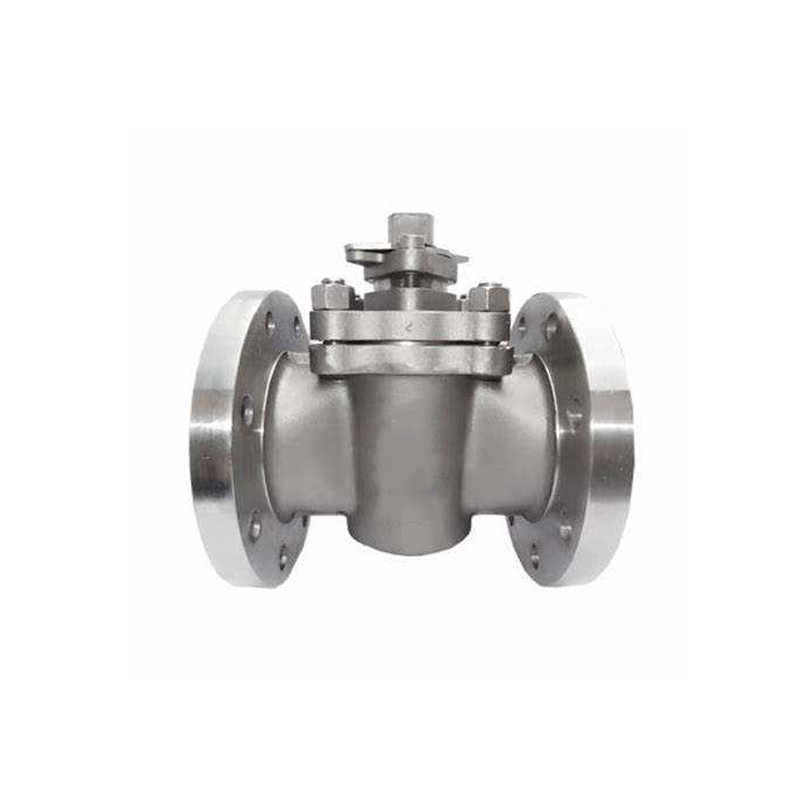
In industrial production processes, automated control of Plug Valve helps achieve fluid control and regulation, enabling automated management of the production process. The following explains how automated control of Plug Valve is achieved.
First, automated control of Plug Valve relies on a complete control system. This system typically includes sensors, a controller, actuators, and a monitoring system.
Sensors collect parameters such as flow rate, pressure, and temperature, and transmit this data to the controller.
The controller performs logical operations and generates control commands based on the parameters collected by the sensors; the actuator executes the commands issued by the controller, controlling the opening and closing of the Universal Valve.
The monitoring system monitors the operating status of the control system in real time and provides data logging and alarm functions.
Second, automated control of Plug Valve can be achieved through different control modes. Common control modes include PID control, ON/OFF control, and stepper control.
PID control is a method that uses proportional, integral, and derivative control parameters to achieve precise control of the Universal Valve. ON/OFF control is a simple control method that controls the on/off state of a Universal Valve by setting a threshold.
Step control, on the other hand, adjusts the opening degree of the Universal Valve through specific step values, thereby regulating the flow rate of the medium.
Furthermore, to achieve automated control of Plug Valve, appropriate control strategies and parameter settings are required. The choice of control strategy should be determined based on specific control requirements and system characteristics; different control strategies will affect the system's response speed, stability, and accuracy.
Parameter settings need to be determined based on actual process requirements and medium characteristics. Reasonable parameter settings can control the stability and performance of the system.
In addition, the automated control of Plug Valve must also consider safety and reliability. During the design and installation of the control system, relevant standards and specifications must be followed to ensure the stability and safety of the control system.
At the same time, regular inspection and maintenance of the control system are necessary to ensure its reliability and long-term stable operation.
In summary, automated control of Plug Valve can help achieve intelligent management of industrial production processes, improving production efficiency and product quality.
By selecting appropriate control systems, control modes, and parameter settings, and paying attention to safety and reliability, the control and automated operation of Plug Valve can be achieved, bringing more convenience and benefits to industrial production.