

① To adjust the valve discharge pressure and reseating pressure, an action test must be carried out with the valve reaching the full opening height. Therefore, it can only be carried out on a large-capacity test device or after the Gate Valve is installed on the protected equipment. The adjustment method varies depending on the valve structure.
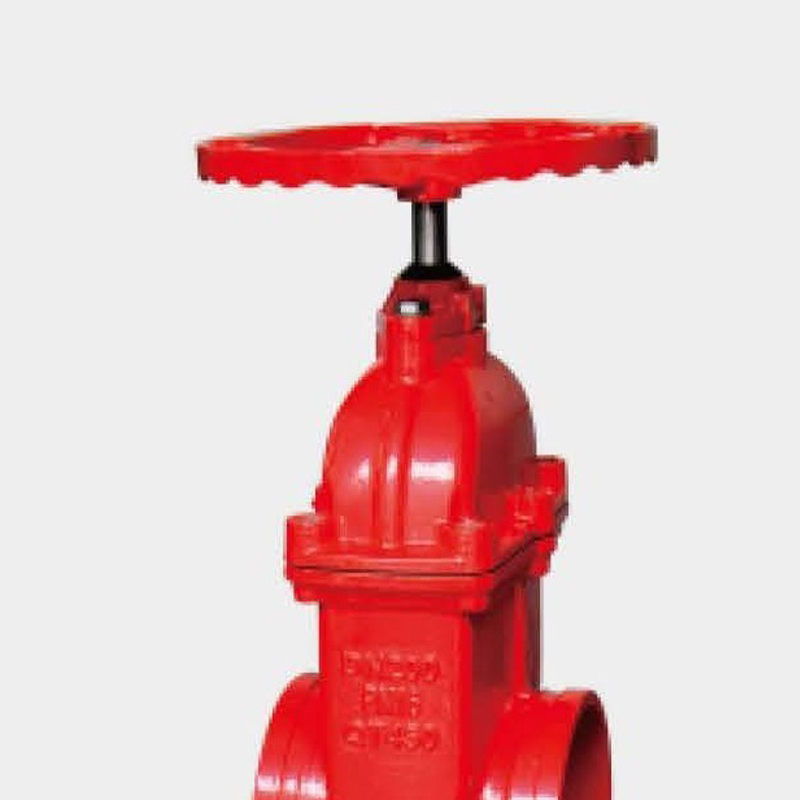
②For the structure with recoil plate and valve seat adjustment ring, the valve seat adjustment ring is used for adjustment. Unscrew the fixing screw of the adjusting ring and insert a thin iron rod or other tool from the exposed screw hole to move the gear teeth on the adjusting ring to make the adjusting ring rotate left and right. When the adjusting ring is rotated counterclockwise to the left, its position increases, and both the discharge pressure and the return pressure will be reduced. On the contrary, when the adjusting ring is rotated clockwise to the right, its position decreases, and both the discharge pressure and the return pressure will increase. Every time you adjust, adjust: the rotation range of the circle should not be too large (usually a few teeth can be turned). After each adjustment, the fixing screw should be tightened so that its end is located in the groove between the two teeth of the adjusting ring, which can prevent the adjusting ring from rotating and produce no radial pressure on the adjusting ring. For safety reasons, before turning the adjustment ring, the Gate Valve inlet pressure should be appropriately reduced (generally should be lower than 90% of the opening pressure) to prevent the valve from suddenly opening during adjustment and causing an accident.
③ For structures with upper and lower adjustment rings (one adjustment ring each on the guide sleeve and valve seat), the adjustment is more complicated. The valve seat adjusting ring is used to change the size of the channel between the valve disc and the adjusting ring, thereby changing the degree of pressure accumulation in the chamber between the valve disc and the adjusting ring when the valve is initially opened. When the valve seat adjustment ring is raised, the degree of pressure accumulation increases, thereby reducing the proportional opening stage of the valve and reaching sudden rapid opening faster. Therefore, raising the valve seat adjustment ring can reduce the discharge pressure. It should be noted that the valve seat adjustment ring cannot be raised too close to the valve disc. In that case, leakage at the sealing surface may cause the valve to suddenly open prematurely, but because the medium pressure is not enough to keep the valve disc in the open position at this time, the valve disc will close again immediately, so the valve will jump. Valve seat adjustment: The "ring" is mainly used to reduce the proportion of the valve, the opening stage and adjust the discharge pressure. It also affects the return pressure.
The upper adjustment ring is used to change the deflection angle of the flowing medium after being reflected on the underside of the valve disc, thereby changing the magnitude of the fluid force, thereby adjusting the seat back pressure. When the upper adjusting ring is raised, the turning angle decreases, and the fluid force decreases accordingly, thereby increasing the seat return pressure. On the contrary, when the upper adjusting ring is lowered, the reseating pressure decreases. Of course, while the upper adjusting ring changes the seat return pressure, it also affects the discharge pressure. That is, raising the upper adjusting ring causes the discharge pressure to increase, and lowering the upper adjusting ring causes the discharge pressure to decrease, but its impact is not as great as that of the back seat. The seat pressure is so obvious.
③ For structures with upper and lower adjustment rings (one adjustment ring each on the guide sleeve and valve seat), the adjustment is more complicated. The valve seat adjusting ring is used to change the size of the channel between the valve disc and the adjusting ring, thereby changing the degree of pressure accumulation in the chamber between the valve disc and the adjusting ring when the valve is initially opened. When the valve seat adjustment ring is raised, the degree of pressure accumulation increases, thereby reducing the proportional opening stage of the valve and reaching sudden rapid opening faster. Therefore, raising the valve seat adjustment ring can reduce the discharge pressure. It should be noted that the valve seat adjustment ring cannot be raised too close to the valve disc. In that case, leakage at the sealing surface may cause the valve to suddenly open prematurely, but because the medium pressure is not enough to keep the valve disc in the open position at this time, the valve disc will close again immediately, so the valve will jump. Valve seat adjustment: The "ring" is mainly used to reduce the proportion of the valve, the opening stage and adjust the discharge pressure. It also affects the return pressure.
The upper adjustment ring is used to change the deflection angle of the flowing medium after being reflected on the underside of the valve disc, thereby changing the magnitude of the fluid force, thereby adjusting the seat back pressure. When the upper adjusting ring is raised, the turning angle decreases, and the fluid force decreases accordingly, thereby increasing the seat return pressure. On the contrary, when the upper adjusting ring is lowered, the reseating pressure decreases. Of course, while the upper adjusting ring changes the seat return pressure, it also affects the discharge pressure. That is, raising the upper adjusting ring causes the discharge pressure to increase, and lowering the upper adjusting ring causes the discharge pressure to decrease, but its impact is not as great as that of the back seat. The seat pressure is so obvious.